
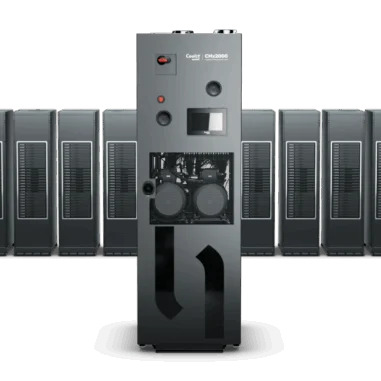
Modern digital infrastructure depends heavily on performance, reliability, and thermal stability. As computing demands continue to rise with artificial intelligence, cloud computing, and high-performance workloads, traditional air-based cooling systems are no longer sufficient. This is where CDUs become essential in enabling scalable and efficient data center environments. A data centers design is only as strong as its cooling architecture. Without effective heat management, even the most advanced servers can experience performance degradation, downtime, or hardware failure.
Table of Contents
- Understanding Cooling Distribution Units in Data Center Environments
- The Role of Cooling Distribution Units in Scalable Design
- Why Liquid Cooling and CDUs Work Better Together?
- Improving Energy Efficiency and Reducing Operational Strain
- Enhancing Thermal Stability in High-Density Computing
- Supporting Advanced Liquid Cooling Architectures
- Reliability and Operational Resilience
- Simplifying Maintenance and Operational Management
- Future-Ready Data Centers Design with CDU Integration
- Real-World Application in Modern Infrastructure
- FAQs
- What are cooling distribution units used for in data centers?
- How do CDUs improve energy efficiency?
- Are coolant distribution units suitable for high-density computing environments?
- What makes CDU units different from traditional cooling systems?
- Why are cooling distribution units important for future data centers design?
- FAQs
- Conclusion
Understanding Cooling Distribution Units in Data Center Environments
A coolant distribution unit regulates temperature by circulating coolant through closed-loop systems. This prevents overheating in high-performance computing environments where traditional air cooling struggles to keep up. Cooling distribution units, often referred to as CDUs, are critical components in liquid cooling systems. They act as intermediaries between facility water systems and IT equipment, ensuring safe and efficient heat transfer.
In advanced infrastructures, CDU units are integrated into rack-level or row-level cooling systems. This allows precise thermal management directly at the source of heat generation, improving efficiency and system reliability.

The Role of Cooling Distribution Units in Scalable Design
Scalability in data center architecture is not just about adding more servers; it’s about ensuring the infrastructure can grow without performance loss. CDUs provide that flexibility.
Supporting High-Density Computing
As workloads increase, server racks generate more heat. CDUs help manage this thermal load efficiently, allowing operators to scale without redesigning entire cooling systems. This makes expansion smoother and more cost-effective.
Enabling Modular Growth
One of the key advantages of cooling distribution units is their modular design. Operators can add capacity incrementally, rather than investing in large-scale infrastructure upgrades. This modularity supports evolving business needs without disrupting operations.
Enhancing System Reliability
Thermal fluctuations can significantly reduce hardware lifespan. By maintaining stable coolant circulation, CDU systems reduce thermal stress, improving overall equipment reliability and minimizing the risk of downtime.
Why Liquid Cooling and CDUs Work Better Together?
Traditional air cooling systems struggle to keep up with modern computing demands. Liquid cooling, supported by cooling distribution units, provides a more efficient alternative.
Improved Heat Transfer Efficiency
Liquid absorbs and transfers heat more effectively than air. CDUs facilitate this process by regulating coolant flow between servers and cooling infrastructure.
Reduced Energy Consumption
By improving cooling efficiency, CDUs reduce the need for excessive fan use and air conditioning. This leads to lower operational energy costs while maintaining optimal temperatures.
Better Performance Stability
Stable thermal conditions ensure that processors can operate at peak performance without throttling. This is particularly important in environments running AI, cloud computing, or large-scale data processing workloads.
Improving Energy Efficiency and Reducing Operational Strain
One of the biggest advantages of CDUs is energy efficiency. Traditional cooling systems often consume significant electricity due to large air handlers and constant airflow requirements. CDUs improve efficiency by delivering cooling directly where it is needed. Instead of cooling entire rooms, they target heat at the rack level or server level.
This precision leads to:
- Reduced energy consumption
- Lower operational costs
- Improved Power Usage Effectiveness (PUE)
- Less strain on facility cooling infrastructure
Companies have contributed to advancements in liquid cooling technologies that integrate seamlessly with CDU-based architectures, improving performance and sustainability outcomes.
Enhancing Thermal Stability in High-Density Computing
High-density computing environments, such as those used for AI training or cloud workloads, generate extreme heat loads. Without proper thermal control, performance throttling or hardware damage can occur. It provides consistent thermal stability by maintaining controlled coolant temperatures and flow rates. This ensures that even under heavy computational loads, systems remain stable and reliable.
A well-designed coolant distribution unit helps maintain:
- Consistent server performance
- Reduced risk of overheating
- Longer hardware lifespan
- Stable operating environments for mission-critical applications
Supporting Advanced Liquid Cooling Architectures
Liquid cooling is becoming a preferred solution for modern data centers in Calgary due to its superior heat transfer capabilities. CDUs play a central role in enabling these systems. In a typical setup, a coolant distribution unit transfers heat from server loops to facility cooling water systems. This separation ensures safety, efficiency, and ease of maintenance.
There are several types of CDU configurations used in industry:
- Rack-based CDUs for localized cooling control
- Row-based CDUs for medium-scale deployments
- Centralized CDU systems for large facilities
Each configuration is designed to meet different scalability and performance requirements.

Upgrade your infrastructure with CoolIT Systems for precision cooling and scalable performance.
Reliability and Operational Resilience
Downtime in a data center can result in significant operational and financial losses. Cooling distribution units enhance reliability by providing redundant cooling pathways and fail-safe mechanisms.
Modern CDU systems are designed with:
- Leak detection sensors
- Redundant pumps
- Automated flow regulation
- Real-time temperature monitoring
These features ensure continuous operation even under unexpected conditions, making CDU units a critical part of resilient infrastructure design.
Simplifying Maintenance and Operational Management
Another key advantage of data center CDU is ease of maintenance. Compared with complex air-cooling systems, CDU-based systems are more modular and easier to service. Technicians can isolate specific cooling loops without shutting down entire systems. This reduces downtime and simplifies long-term infrastructure management. Additionally, intelligent monitoring systems allow operators to track performance metrics in real time, improving decision-making and predictive maintenance capabilities.
Future-Ready Data Centers Design with CDU Integration
As digital transformation accelerates, data center equipment must evolve to support higher compute densities and more efficient energy use. They are at the core of this transformation. Future-ready infrastructure increasingly relies on liquid cooling, and CDUs provide the bridge between traditional facility systems and advanced thermal technologies.
Organizations adopting CDU-based designs are better positioned to:
- Support AI-driven workloads
- Reduce carbon footprint through efficiency gains
- Scale operations without major infrastructure redesigns
- Improve long-term operational sustainability
Real-World Application in Modern Infrastructure
Leading technology providers and infrastructure designers are increasingly integrating CDU solutions into their systems. Companies such as CoolIT Systems have helped advance liquid cooling technologies that align with modern CDU deployment strategies.
These systems are particularly valuable in environments where performance and uptime are critical, including enterprise computing, cloud services, and research-intensive workloads.

FAQs
What are cooling distribution units used for in data centers?
Cooling distribution units are used to manage and regulate liquid cooling systems in data centers design. They transfer heat away from IT equipment by circulating coolant through controlled loops, ensuring stable and efficient temperature management.
How do CDUs improve energy efficiency?
CDUs improve energy efficiency by delivering cooling directly to heat sources instead of cooling entire rooms. This targeted approach reduces electricity consumption and improves overall cooling performance.
Are coolant distribution units suitable for high-density computing environments?
Yes, coolant distribution unit systems are ideal for high-density environments. They provide precise thermal control that supports powerful computing workloads without overheating risks.
What makes CDU units different from traditional cooling systems?
CDU units use liquid cooling technology instead of air-based cooling. This allows more efficient heat transfer, better scalability, and improved performance in modern data center environments.
Why are cooling distribution units important for future data centers design?
They are essential for future-ready designs because they support scalable, energy-efficient, and high-performance computing environments. They enable data centers to handle growing workloads while maintaining stability and sustainability.
Conclusion
Cooling distribution units have become a foundational element in scalable data centers design. By improving thermal efficiency, supporting modular expansion, and reducing energy consumption, they enable modern infrastructure to meet increasing digital demands. As computing environments evolve, integrating advanced CDU units ensures long-term reliability and performance stability. To experience advanced cooling infrastructure in practice, explore installations and follow directions on Google Maps to see how modern cooling systems are shaping the future of data centers.


